Briana’s Criminal Justice Portfolio

How True Crime Media Shapes Our Understanding of Serial Killers (Jeffrey Dahmer)

When it comes to serial killers and mass murderers, I usually do not dig deeply into their stories because they are constantly broadcast across different news channels, newspapers, and especially social media, and it can be hard to tell what is actually factual. There are so many opinions and perspectives that it becomes overwhelming at…

When it comes to serial killers and mass murderers, I usually do not dig deeply into their stories because they are constantly broadcast across different news channels, newspapers, and especially social media, and it can be hard to tell what is actually factual. There are so many opinions and perspectives that it becomes overwhelming at times. I would rather watch a movie about serial killers because I am not really a documentary person. Documentaries are boring if you ask me, and they usually include different scenarios from different stories combined into one. Recently, Netflix released a series on Jeffrey Dahmer, someone I had never heard of before, although I first saw people talking about it on Facebook. I tried to watch it, but I could not get past all the disturbing things he experienced growing up, as well as what he did later in life. Honestly, I was scared to continue watching.

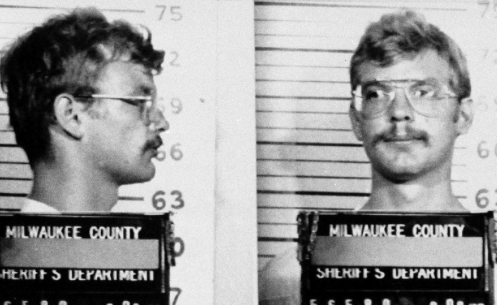
Jeffrey Dahmer is portrayed throughout the media as having a troubled childhood that stemmed into struggles with abandonment, social isolation, and difficulty forming relationships. In the Netflix series, Jeffrey Dahmer is described in ways that present him as a violent person whose childhood was affected by family trauma. Having such a troubled childhood is often used to justify why Dahmer may have shifted toward violence as a way to escape his family situation.

Empirical research argues that many of the things we believe about serial killers come from the media and what is presented to us as the truth about what all serial killers are like. In fact, according to Fox and Levin (1999), there are many myths about what serial killers are and how they are portrayed. Fox and Levin state that there are common myths that serial killers are different from everyone else, that they are insane, and that their behavior comes from childhood trauma. However, research suggests that many serial killers appear ordinary and act normal, and that childhood trauma alone cannot pinpoint the cause of their violent behavior. The research at hand counteracts what the media feeds us to believe about how serial killers are shaped and what they want us to believe.

The media is not always completely wrong when they cover serial killers because they usually show that serial killers are dangerous to the community and cause severe harm to people. However, the media can label serial killers as monsters and create panic and then shift the focus and overlook signs of danger that were already there. Research shows that violence tends to develop over time and follow identifiable patterns rather than appearing randomly (Alvarez & Bachman, 2023). This focus on extreme cases can distract from more common forms of violence that affect everyday people and take attention away from prevention and early warning signs.
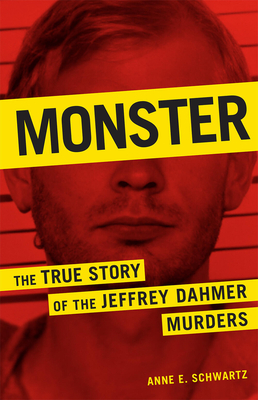
In conclusion, true crime media can shape how society understands what a serial killer is and the violence behind the person. In the example of Jeffrey Dahmer, the media labeled him with many myths about his violent behavior but was not always able to fully back these claims with empirical research. We now know that serial killers do not randomly attack, but that their violence is built up over time and often follows patterns. When the media portrays serial killers in sensational ways, the public can go into panic mode, leading to fear and major misunderstandings about who is behind violent crime.
References:

Fox, J. A., & Levin, J. (1999). Serial murder: Popular myths and empirical realities. In M. D. Smith & M. A. Zahn (Eds.), Homicide: A sourcebook of social research (pp. 165–175). Sage Publications.

Alvarez, A., & Bachman, R. (2023). Violence: The enduring problem (5th ed.). Sage Publications.

6 responses to “How True Crime Media Shapes Our Understanding of Serial Killers (Jeffrey Dahmer)”

  1. Erica Grayson Avatar
    Erica Grayson

    Your post raises an important point about how overwhelming and distorted media coverage of serial killers can be. I think it’s completely valid to feel hesitant about engaging deeply with these stories, especially when social media amplifies opinions, dramatizations, and misinformation. That overload can make it difficult to separate fact from narrative, which is exactly why critical analysis—like the one you’re doing here—is so important.

    Your discussion of the Netflix series on Jeffrey Dahmer highlights how dramatizations often center heavily on childhood trauma. While it’s true that Dahmer experienced family instability and social isolation, you correctly point out that research does not support a simple cause-and-effect explanation between trauma and serial murder. Many individuals experience difficult childhoods without becoming violent offenders. By bringing in Fox and Levin (1999), you effectively challenge the myth that serial killers are either “insane monsters” or purely products of abuse. That shows strong engagement with empirical research rather than relying solely on media narratives.

    I also appreciate your point about labeling. When the media describes offenders as “monsters,” it can create emotional distance that prevents society from examining warning signs, behavioral patterns, or systemic failures. As Alvarez and Bachman (2023) explain, violence tends to develop over time and often follows identifiable pathways. By focusing only on extreme, sensational elements, media coverage may overlook those gradual developments and reinforce the idea that serial violence is random and unpredictable. That misunderstanding can fuel public panic rather than informed prevention.

    Another strong part of your discussion is your recognition that the media is not entirely wrong. Serial killers are dangerous, and public awareness does matter. However, the balance between awareness and sensationalism is often skewed. When extreme cases dominate coverage, they can distort perceptions of crime overall, making rare forms of violence seem common while minimizing more prevalent issues like domestic violence or acquaintance-based homicide.

    If I were to suggest one area to strengthen your post, it would be to expand slightly on prevention. You mention early warning signs and patterns—adding a brief example of what those patterns might include (such as escalating violence, antisocial traits, or prior criminal behavior) would deepen your analysis even further.

    Overall, your response thoughtfully critiques how true crime media shapes public understanding. You effectively connect media portrayals, research findings, and broader social consequences like fear and misunderstanding. It’s clear you are thinking critically about not just the offender, but about how narratives influence society’s view of violence.

    Like

  2. Your post raises an important point about how overwhelming and distorted media coverage of serial killers can be. I think it’s completely valid to feel hesitant about engaging deeply with these stories, especially when social media amplifies opinions, dramatizations, and misinformation. That overload can make it difficult to separate fact from narrative, which is exactly why critical analysis—like the one you’re doing here—is so important.

    Your discussion of the Netflix series on **Jeffrey Dahmer** highlights how dramatizations often center heavily on childhood trauma. While it’s true that Dahmer experienced family instability and social isolation, you correctly point out that research does not support a simple cause-and-effect explanation between trauma and serial murder. Many individuals experience difficult childhoods without becoming violent offenders. By bringing in Fox and Levin (1999), you effectively challenge the myth that serial killers are either “insane monsters” or purely products of abuse. That shows strong engagement with empirical research rather than relying solely on media narratives.

    I also appreciate your point about labeling. When the media describes offenders as “monsters,” it can create emotional distance that prevents society from examining warning signs, behavioral patterns, or systemic failures. As Alvarez and Bachman (2023) explain, violence tends to develop over time and often follows identifiable pathways. By focusing only on extreme, sensational elements, media coverage may overlook those gradual developments and reinforce the idea that serial violence is random and unpredictable. That misunderstanding can fuel public panic rather than informed prevention.

    Another strong part of your discussion is your recognition that the media is not entirely wrong. Serial killers are dangerous, and public awareness does matter. However, the balance between awareness and sensationalism is often skewed. When extreme cases dominate coverage, they can distort perceptions of crime overall, making rare forms of violence seem common while minimizing more prevalent issues like domestic violence or acquaintance-based homicide.

    If I were to suggest one area to strengthen your post, it would be to expand slightly on prevention. You mention early warning signs and patterns—adding a brief example of what those patterns might include (such as escalating violence, antisocial traits, or prior criminal behavior) would deepen your analysis even further.

    Overall, your response thoughtfully critiques how true crime media shapes public understanding. You effectively connect media portrayals, research findings, and broader social consequences like fear and misunderstanding. It’s clear you are thinking critically about not just the offender, but about how narratives influence society’s view of violence.

    Like

    1. Thank you so much for your thoughtful feedback! I really appreciate your point about how media dramatizations can create emotional distance and make it harder to notice warning signs or patterns. I agree that while public awareness is important, sensationalized coverage often skews perceptions of crime and can lead to panic.

      Building on your suggestion about prevention, research shows that violent behavior in serial killers often develops gradually and follows identifiable patterns, such as escalating aggression, antisocial traits, or prior criminal behavior (Miller, 2014; Marono, Reid, Yaksic, & Keatley, 2020). These studies also reinforce that many commonly held beliefs—like the idea that serial killers are fundamentally different from others or that childhood trauma alone explains their behavior—are oversimplified (Hodgkinson, Prins, & Stuart-Bennett, 2017). Incorporating this peer-reviewed research helps highlight that media myths often exaggerate danger while underestimating the complexity of violent behavior.
      References

      Alvarez, A., & Bachman, R. (2023). Violence: The enduring problem (5th ed.). Sage Publications.

      Fox, J. A., & Levin, J. (1999). Serial murder: Popular myths and empirical realities. In M. D. Smith & M. A. Zahn (Eds.), Homicide: A sourcebook of social research (pp. 165–175). Sage Publications.

      Hodgkinson, S., Prins, H., & Stuart-Bennett, J. (2017). Monsters, madmen… and myths: A critical review of the serial killing literature. Aggression and Violent Behavior, 34, 282–289.

      Marono, A. J., Reid, S., Yaksic, E., & Keatley, D. A. (2020). A behaviour sequence analysis of serial killers’ lives: From childhood abuse to methods of murder. Psychiatry, Psychology and Law, 27(1), 126–137.

      Miller, L. (2014). Serial killers: I. Subtypes, patterns, and motives. Aggression and Violent Behavior, 19(1), 1–11.

      Like

  3. Edward Blakey response

    Briana,

    The detailed research you provided is pivotal in society trying to understand the mind of a serial killer. It is evident that trauma as a child shaped and molded this man’s mental capacity to do what he did to innocent men. The big question remains is why he only killed “men”?

    There is no recorded evidence of him killing a woman or women. Still society has many questions as to why this man did these killings. Perhaps biological heredity played a part or perhaps just his cultural community surroundings when he was a child played a huge part. The outcome of his behaviors is tragic.

    Like

  4. Indya Hall Avatar

    I enjoyed reading your post and how you broke down the difference between how the media portrays serial killers versus how they are in real life. I enjoy documentaries because I feel like they give a broader perspective to the individual who is being investigated. Being able to learn about someone from different perspectives is very interesting to me including Jeffery Dahmer’s story. I agree that it is important that many serial killers act and look like everyday people. They have manners and know when to act a certain way. With the media portraying certain stereotypes it makes it hard for people to know what to truly be aware of.

    Like

  5. Nashaiya Boyles Avatar
    Nashaiya Boyles

    I like how you pointed out the role media plays in shaping how we think about serial killers. A lot of people form their opinions from movies, social media, or dramatized shows instead of research, so your reflection on that disconnect is really important. The way you described feeling overwhelmed by all the opinions and sensational coverage is very relatable. True crime content is everywhere now, and it often blurs the line between education and entertainment.

    Your discussion of Jeffrey Dahmer is a strong example of how media narratives can shape public perception. Many portrayals focus heavily on childhood trauma or “warning signs,” which can make it seem like violent behavior has a simple explanation. But like you mentioned, research suggests violence is more complex and rarely comes from a single cause. I also appreciate that you referenced Fox and Levin’s work on myths about serial killers. That helps ground your post in research instead of just opinion, which strengthens your overall argument.

    One thing I found especially interesting was your comment about documentaries versus dramatized shows. Even though you said documentaries can feel boring, they often present more factual context than fictionalized series. At the same time, dramatizations can make people more emotionally engaged, which might explain why they’re so popular. That raises an important question about how we balance engagement with accuracy in true crime media.

    Like

Leave a reply to Erica Grayson Cancel reply

Briana’s Criminal Justice Portfolio